
Among the 30 Sensex companies, IndusInd Bank, Axis Bank, ICICI Bank, Bharti Airtel, Kotak Mahindra Bank, Maruti, JSW Steel and Bajaj Finserv were among the laggards. In contrast, Reliance Industries, Tata Motors, Asian Paints, Nestle and Titan were the biggest gainers.

The Securities and Exchange Board of India (Sebi) is likely to notify soon stricter derivatives trading norms aimed at curbing speculative trading activity and curtailing losses of over Rs 50,000 crore incurred by retail investors every year. Based on the feedback received from industry participants, seven measures proposed by the market regulator in a consultation paper in July may be implemented with minor tweaks ahead of its forthcoming board meeting, said sources.

'In the short term you keep your return expectations very, very low; in the medium term be prepared to invest and in the long term growth will come and your returns from stocks will be high.'

Foreign investors turned net sellers in October, offloading shares worth Rs 27,142 crore in just the first three days of October due to intensifying conflict between Israel and Iran, a sharp rise in crude oil prices, and improved performance of Chinese markets. The outflow came after FPI investment reached a nine-month high of Rs 57,724 crore in September. Since June, Foreign Portfolio Investors (FPIs) have consistently bought equities after withdrawing Rs 34,252 crore in April-May.

'Regardless of whether you invest Rs 100 or Rs 1 crore per month, risk is inevitable.' 'Positive returns at the end of the year can never be guaranteed.' 'This is a fundamental truth every SIP investor must grasp.'

The Indian government has assured citizens that the country has ample food stocks to meet domestic demand, despite escalating tensions with Pakistan. The government has also warned traders against hoarding essential food items and creating artificial shortages, emphasizing that there is no need for panic buying. The food ministry detailed the country's current stock levels, showcasing a surplus over required buffer norms for rice, wheat, and pulses. Additionally, India holds substantial edible oil and sugar stocks, ensuring a strong food security position.

The domestic stock market this week would monitor the geopolitical developments after India and Pakistan reached an understanding to stop military actions, analysts said. Moreover, macroeconomic data announcements, Q4 earnings, trading activity of foreign investors and global market trends are also likely to influence sentiments, traders said.

About 2.2 million new dematerialised (demat) accounts were opened in May, raising the total to 196.6 million as stock prices continued their upward trend.

'As long as Sebi maintains transparency and market stability, the Jane Street episode is unlikely to deter long-term foreign capital.'

Pakistan's Ministry of Economic Affairs X account was hacked and a fake appeal was posted, calling for more international loans to help defuse tensions with India following the Pahalgam terror attack. The post urged the international community to help de-escalate the situation and requested more loans to address "heavy losses" caused by the tensions. The hacking incident occurred during a crucial meeting of the IMF executive board to decide on the next installment of a USD 7 billion loan for Pakistan.

Among the 30 Sensex firms, Bajaj Finserv, IndusInd Bank, Tech Mahindra, Bajaj Finance, Kotak Mahindra Bank, Axis Bank, NTPC, and Sun Pharma were the major gainers. On the other hand, Bharti Airtel, ITC, Adani Ports, JSW Steel and Tata Motors were among the laggards.
Among the Sensex pack, Titan, Adani Ports, Tata Steel, JSW Steel, UltraTech Cement, Asian Paints, Mahindra & Mahindra and Bajaj Finserv were the biggest laggards. ITC, Hindustan Unilever, Nestle, HCL Technologies and Tata Motors were among the gainers.

From the Sensex pack, Bajaj Finserv, Mahindra & Mahindra, Axis Bank, Bajaj Finance, Adani Ports, ICICI Bank, Zomato and UltraTech Cement were among the biggest gainers. However, ITC, Nestle, State Bank of India, Reliance Industries, Asian Paints and Tata Consultancy Services were among the laggards.

The stock of the country's largest plastic pipe maker Supreme Industries has shed 22 per cent since its highs in October. The September quarter results were below expectations as the volatility in polyvinyl chloride (PVC) resin prices led to a major destocking across the trade channel.

From the Sensex firms, Adani Ports, Bajaj Finance, Tech Mahindra, IndusInd Bank, Nestle and Tata Steel were among the major laggards. In contrast, Mahindra & Mahindra, Titan, Larsen & Toubro, Bharti Airtel and Maruti were among the gainers.

Value mutual funds have witnessed robust investor interest, garnering Rs 22,757 crore in inflows in 2024, nearly double the amount seen in 2023, fueled by impressive returns generated by the segment. This surge reflects a shift in investor focus towards fundamentally strong yet undervalued stocks.

The Securities and Exchange Board of India (Sebi) has proposed stricter eligibility criteria for adding and retaining stocks in the futures and options (F&O) segment, which accounts for the bulk of the trading volumes. The proposal-which comes six years after the securities regulator last revised the stock selection framework---is much awaited by the market players as the derivatives stock list has largely remained stagnant for the last two years.

'It's important for India to think about areas where it wants the US to move.' 'We can be far more innovative in what we ask the US.' 'Given that there's a package deal, why not do it?'

Exchange Traded Funds (ETFs) have stepped into the spotlight this quarter. With evolving market conditions and shifting investor sentiment, ETFs offer a timely solution for accessing growth with liquidity and efficiency. In this article, we break down the most important ETF trends, performance drivers, and what to watch in the months ahead.

'He has been one of the clearest thinkers in the history of business.'

In a move that could have implications for market share dynamics, the Securities and Exchange Board of India (Sebi) has permitted the National Stock Exchange (NSE) and the BSE to alter the days for settlement of equity derivatives contracts.

India's second largest IT company Infosys' board has approved the grant of stock incentives or Employee Stock Option Plans (ESOPs) worth over Rs 51 crore to CEO and MD Salil Parekh. These stock incentives are under various heads including ESG and equity, and add up to over Rs 51 crore.

Among Sensex firms, Bajaj Finserv, Tata Steel, Sun Pharma, Tech Mahindra, Bajaj Finance, NTPC, Nestle, Tata Motors, Hindustan Unilever and Mahindra & Mahindra were the biggest gainers. IndusInd Bank, Kotak Mahindra Bank, Power Grid and ITC were among the laggards.

From the Sensex firms, Infosys declined by 3.54 per cent. Power Grid, Eternal, HCL Tech, Tata Consultancy Services, Bharti Airtel, IndusInd Bank, NTPC and HDFC Bank were the major laggards. Sun Pharma, Adani Ports, Bajaj Finance, State Bank of India and Tech Mahindra were the gainers.

Pakistan on Friday said that the X account of its ministry of economic affairs was hacked and an appeal was posted on it for more international loans to meet the 'heavy losses' caused by the current tensions with India.

Among the Sensex firms, Titan, Asian Paints, ITC, Hindustan Unilever, Nestle India, Bajaj Finserv and Bharti Airtel were among the gainers. In contrast, UltraTech Cement, Tech Mahindra, Tata Steel, Power Grid, HDFC Bank, HCL Technology, State Bank of India and ICICI Bank were the laggards.

Trading sentiment in the equity market will largely be driven by domestic corporate quarterly earnings, any update related to US tariffs and foreign fund movements this week, analysts said. Investors would also focus on world market trends, movement of global oil benchmark Brent crude and the rupee-dollar trend for further cues, experts noted.

Seek advice from Sebi-registered investment advisors whose names are available on Sebi's Web site.

The current spurt in the stock market is on account of strong fundamentals and robust corporate earnings and retail investors can look for buying opportunities to accumulate quality stocks, experts said.

Benchmark stock indices Sensex and Nifty rebounded on Thursday after two days of decline, mirroring a rally in global markets as a US court blocked President Donald Trump's reciprocal tariffs. The 30-share BSE Sensex climbed 320.70 points or 0.39 per cent to settle at 81,633.02.

Dalal Street had a roller coaster ride in 2024 from shattering record after record to facing heavy correction off-late but equity markets still rewarded investors with positive returns, driven by a surge in domestic fund flows and a resilient macro landscape. The first half of the year saw robust corporate earnings, a surge in domestic flows, and a resilient macro landscape, driving the Nifty to an all-time high of 26,277.35 in September 2024, according to Motilal Oswal Wealth Management.

In an eventful week ahead, stock markets may face volatile trends before the RBI's interest rate decision and the US inflation data announcements, as investors continue to assess the broader implications of US tariffs on global economy and inflation, analysts said. Investors fear that a full-blown trade war will impact global trade and economic growth, according to market experts.

The NSE International Exchange (NSE IFSC) on Monday said trading in select US stocks will soon be facilitated through its platform. The Exchange will soon announce the operational details and will launch the product at the earliest possible time, NSE IFSC said in a statement. It further said depositories, banks and brokers have already started working with NSE IFSC to enable these investment products for Indian investors.

From the Sensex firms, Eternal, Power Grid, ITC, Bajaj Finserv, Nestle, Axis Bank, Kotak Mahindra Bank and Adani Ports were among the biggest gainers. Sun Pharma was the only laggard, declining nearly 2 per cent.
British multinational BAT Plc on Wednesday trimmed its ownership in conglomerate ITC by divesting a 2.5 per cent stake for Rs 12,927 crore ($1.51 billion) through a block deal, according to a revised term sheet accessed by PTI. Following the stake sale, shares of ITC went lower by 1.15 per cent to trade at Rs 421.15 apiece on the NSE.
Equity benchmark indices Sensex and Nifty settled lower for the sixth straight session on Monday due to heavy selling in bellwether stocks including HDFC Bank and Reliance Industries amid mixed trends in the global markets and outflow of foreign funds. Falling for the sixth consecutive session, the BSE Sensex tumbled 638.45 points or 0.78 per cent to settle at 81,050. During the day, it plummeted 962.39 points or 1.17 per cent to 80,726.06. The NSE Nifty slumped 218.85 points or 0.87 per cent to end at 24,795.75.
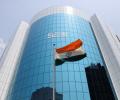
The change will help companies address market rumours without being worried about the impact on deal pricing.

Movement in the equity market this week will be guided by a host of macroeconomic data announcements, global trends and trading activity of foreign investors, analysts said. Stocks markets concluded the last week on a subdued note, as investors grappled with global uncertainties.

Of the 43 new issues listed on the BSE between April and September 2007, 33 are currently trading at a premium over the offer prices. Of the 33, nine have appreciated by over 100 per cent each, while 15 gained between 25 and 100 per cent.

Indian stock markets have experienced some ups and downs in the first half of 2025. However, both the Nifty 50 and Sensex saw steady gains, supported by a healthy economy and better corporate earnings. In this article, we will look at the detailed performance of these key indices and explore the sectors that drove the market rally.
